
Migrant Integration: The Multidisciplinary Aspect
The integration of migrants is a complex process shaped by multiple interconnected dimensions, including social, economic, cultural, and political factors. Understanding this process requires a multidisciplinary perspective that brings together insights from fields such as sociology, economics, public policy, and education. By examining these diverse aspects, a more comprehensive and effective approach to integration can be developed.
Table of Contents
Migration History
Migration has a history that goes back as long as human life. The pre-modern migration of human populations seems to begin with the movement of Homo erectus out of Africa across Eurasia about 1.75 to million years ago. Migration has been stated as essential to human history, shaping societies and cultures for centuries. According to the Striking Women’s Project on migration, the history of migration has evolved across different periods (https://www.striking-women.org/ ). In the 17th and 18th centuries, economic, religious, and security factors often drove migration within Europe, Africa, and Asia. In Europe, religious persecution led groups like Jews and Huguenots to relocate, while economic changes pushed farmers into industrial labour. In Africa, seasonal migrations were common for hunting, agriculture, and trade, and in Asia, trade routes facilitated movement, with merchants and skilled workers traveling across regions.
From the 1500s to the mid-19th century, European colonization led to large-scale migration to the Americas, Australia, and New Zealand. Settlers, including the Pilgrim Fathers who left Plymouth in 1620, established permanent communities, often at the expense of indigenous populations. At the same time, the transatlantic slave trade (1550–late 18th century) forcibly displaced millions of Africans to the Americas, profoundly impacting global demographics and economies.
After the abolition of slavery, European colonies faced labour shortages, leading to the recruitment of indentured labourers, particularly from South Asia (1834–1917). These workers signed contracts to work in distant lands, often under harsh conditions. Meanwhile, in the 19th and early 20th centuries, economic prospects and political instability fuelled large-scale migration from Europe to North America, contributing to the rapid development of industrial societies.
Following World War II, many European countries needed labour for reconstruction, attracting migrants from former colonies and other regions. This period (late 1940s–1960s) significantly reshaped the demographic landscape of Europe. Since the 1970s, globalization, economic inequalities, and political conflicts have continued to drive migration worldwide. Advances in transportation and communication have made migration more accessible, contributing to both voluntary and forced movements that continue to shape societies today.
This historical perspective helps us understand the complexities of modern migration, showing that movement across borders has always been a fundamental part of human civilization. Although migration has always been a part of human history, recent years have seen it become both more facilitated and increasingly complex. Advances in transportation and communication have made it easier to cross borders, yet migration has also emerged as a critical and often contentious issue. Its impact extends across economic, cultural, social, and political spheres, shaping public discourse and policy decisions. At the highest levels of political debate, migration remains a key topic, with policymakers integrating it into their future strategies and agendas.
Interestingly, some arguments used to highlight the advantages of migration can also be framed as disadvantages, depending on the perspective. One such example is the concept of “racial purity.” Opponents of migration argue that the movement of people across borders may lead to the loss of a society’s perceived racial or cultural identity. While this claim is rooted in exclusionary and unethical views, history shows that the idea of a “pure race” has long been obsolete, particularly in large and diverse societies. Even before modern transportation made travel more accessible, people formed relationships across borders, leading to natural genetic diversity.
From a scientific perspective, genetic diversity is essential for the health and resilience of populations. Studies in genetics have shown that variation within gene pools reduces the risks associated with hereditary diseases and strengthens a species’ ability to adapt and survive. In contrast, inbreeding, common in small, isolated populations, can increase the likelihood of genetic disorders and weaken long-term survival. In this sense, migration contributes to a more genetically diverse and resilient human population (Source: Frontiers for Young Minds).
Another common concern regarding migration is its impact on the labor market. Some locals fear that an increase in migrants may lead to fewer job opportunities, creating a more competitive environment that reduces their chances of securing stable employment. However, from another perspective, migration can serve as a driving force for economic growth and development. In many cases, migrants contribute to the economy by filling labor shortages, starting businesses, and bringing diverse skills that enhance productivity. This creates a mutually beneficial relationship between migrants and the host country. Historical evidence shows that nations that have welcomed skilled talent from abroad often experience greater economic expansion, innovation, and overall prosperity.
However, despite the positive economic and social contributions of migration, many Western countries are increasingly adopting stricter immigration policies and expressing growing resistance toward migration. In regions like the United States and Europe, political discourse and public sentiment have shifted toward more restrictive approaches, often fuelled by concerns over national identity, economic competition, and social cohesion. This shift raises important questions about the challenges of cultural diversity and whether existing integration strategies are truly effective in fostering inclusive societies.
Migrants' Challenges and Social Perceptions
Substantial investments have been made in migrant education in recent decades, aiming to integrate migrants into host societies better. Despite these efforts, dissatisfaction remains widespread. One of the most vocal critics of migration policies, especially regarding illegal migrants, is U.S. President Donald Trump. His focus on reducing migration has been a central theme of his political platform, and his complaints about migration, alongside promises to tighten borders, were key factors in his electoral victory. This stance has sparked heated debates, drawing both support and criticism.
Beyond political discourse, negative societal attitudes toward migrants can manifest in both overt and covert racism and discrimination, often affecting their daily interactions in host countries. These attitudes are sometimes exacerbated by media reports of crimes allegedly committed by migrants, particularly in European cities. While these reports can be exaggerated, it is understandable that many citizens, especially taxpayers, may feel frustrated when hearing about crimes involving migrants.
Regardless of how accurate or distorted the media portrayal is, it is crucial to examine the root causes of these criminal incidents. A simplistic response, such as closing borders or implementing stricter migrant acceptance policies, may provide temporary relief but ultimately stifles the potential benefits of migration, including the opportunity to welcome talented individuals into society.
It is time to critically assess the effectiveness of the numerous programs and initiatives funded by individuals, governments, and NGOs over the years. Despite these investments, significant challenges persist. A more practical and realistic approach may be necessary. Migrants’ rights are often overlooked or violated, particularly in more restrictive immigration climates. Therefore, it is essential to explore the ethical implications of migration policies that neglect human rights, as well as the role of social justice movements in advocating for migrants. At the same time, we must remain sensitive to the powerful role the media plays in shaping how migrants are portrayed in society. Media narratives, whether sensationalized or balanced, greatly influence public opinion and can contribute to xenophobia, racism, or, conversely, support for migrants and deny the problems they sometimes impose on society.
It is important to note that while Western countries may increasingly resist accepting new refugees and lose interest in accepting even other migrants, they cannot deny the existing migrant population, including those who have already become citizens. This brings us to the pressing issue of second-generation migrants, who face the challenge of balancing their cultural heritage with the expectations of the host society. These challenges often manifest in their identity development, access to education, and opportunities in the labor market, which should be addressed in public strategies rather than specific programs.
Therefore, standing at either the left extremism, denying the issues caused by migration, or the extreme right side, advocating restrictive immigration policies with a bigoted and racist lens, will not help solve the problems at hand. Instead, it is crucial to reflect on the strategies, efforts, and investments already made to facilitate the integration of migrants. A critical and fair investigation is needed to understand what has worked, what has not, and where improvements are required.
Migrants’ Integration in Theory and Research
Migrant integration has become a key focus of global policy discussions, particularly with the adoption of the 2030 Sustainable Development Agenda, which emphasizes the principle of “leaving no one behind”, including migrants. According to the Migration Data Portal, there is no universally accepted definition of integration, as its meaning varies depending on context and country-specific approaches. Nevertheless, integration is broadly defined as:
“The process by which migrants become accepted into society, both as individuals and as groups….[Integration] refers to a two-way process of adaptation by migrants and host societies…[and implies] consideration of the rights and obligations of migrants and host societies, of access to different kinds of services and the labour market, and of identification and respect for a core set of values that bind migrants and host communities in a common purpose” (IOM, 2011).
Integration occurs across multiple levels, individual, family, community, and national, and encompasses both public and private spheres (EU Council, 2004). In Europe, the Zaragoza Indicators provide a framework for assessing integration in four key areas: employment, education, social inclusion, and active citizenship( Huddleston et al., 2013). The Migration Data Portal further expands on these areas, highlighting key dimensions of integration, including:
- Labour market: Employment rates, wages, occupational status, and overqualification levels.
- Education: Educational attainment, dropout rates, and skill development.
- Health: Life expectancy and overall well-being.
- Social inclusion: Homeownership, child poverty, and social mobility.
- Civic engagement: Political participation, naturalization rates, and public sector representation.
- Cultural inclusion: Language acquisition, religious practices, and cultural adaptation.
- Financial inclusion: Access to banking, credit, and financial advice.
- Spatial inclusion: Residential segregation and access to diverse neighbourhoods.
- Public opinion: Perceptions of integration and attitudes toward migrants.
A recent joint OECD-European Commission report (2023) provides a comprehensive comparison of integration outcomes across OECD, EU, and selected non-EU countries. The report analyzes 83 indicators across three main areas: labour market and skills, living conditions, and civic and social integration. Findings suggest that while progress has been made, significant gaps remain. For example, more than one-third of foreign-born individuals in the EU have only a primary education—nearly twice the rate of native-born populations. Additionally, many migrants struggle to find employment that matches their skills.
Social integration remains a complex challenge. In most OECD countries, migrants participate in voluntary organizations at lower rates than native-born individuals. However, they tend to report higher levels of trust in the police and legal system in two-thirds of surveyed countries. These findings indicate that while economic integration may improve over time, social and civic participation requires further attention.
These results come even though the European Union allocates significant financial resources to migrant integration, reflecting its commitment to fostering inclusive societies. The Asylum, Migration and Integration Fund (AMIF) alone has a budget of €9.88 billion for the 2021-2027 period, averaging around €1.41 billion per year. Additionally, in the proposed EU budget for 2025, approximately €2.1 billion is designated for migration-related expenditures within the EU, with €1.9 billion specifically aimed at supporting migrants and asylum seekers. Beyond these EU-level funds, individual member states also invest substantial national resources into integration programs, covering areas such as employment, education, housing, and social inclusion. Despite this extensive financial commitment, challenges persist, raising critical questions about the effectiveness and impact of these investments.
Global Equity Leadership
Since the migration issue is a global challenge, it requires new strategies at different levels. Recognizing this complexity, the United Nations Secretary-General established the Global Migration Group (GMG) in early 2006 at the highest levels. This group brings together ten key organizations actively involved in migration issues, including
- International Labour Organization (ILO)
- International Organization for Migration (IOM)
- United Nations Conference on Trade and Development (UNCTAD)
- United Nations Development Programme (UNDP)
- United Nations Department of Economic and Social Affairs (UN-DESA)
- United Nations Population Fund (UNFPA)
- Office of the United Nations High Commissioner for Human Rights (OHCHR)
- United Nations High Commissioner for Refugees (UNHCR)
- United Nations Office on Drugs and Crime (UNODC)
- World Bank.
While these organizations have made significant contributions to addressing migration, their efforts are sometimes constrained by broader political dynamics. Often, political leaders maintain a detached stance toward events beyond their borders, which can exacerbate migration flows. Historical practices such as colonization and the exploitation of developing countries for financial gain have created longstanding inequalities and discriminatory conditions, prompting many individuals to emigrate in search of better lives.
In today’s advanced information age, citizens are acutely aware of global injustices and expect they have to face and expect global organizations to uphold human rights and address systemic inequalities by local governments. However, when governments adopt a narrow policy of closing borders and distancing themselves from international human rights issues, they risk neglecting the root causes of migration. High-profile crises, such as the catastrophic human rights abuses in Syria, the rapid violence in Iran, and the systemic oppression in Afghanistan, illustrate how state-sanctioned violence and neglect can force people into perilous migration journeys, imposing substantial social and economic burdens on host countries.
To truly mitigate the waves of migration, it is not enough to focus solely on integration programs in destination countries. Instead, a more effective strategy would be to bolster support for human rights initiatives in countries where repressive regimes persist. This approach should be driven by high-level political commitment and international cooperation, with organizations like the United Nations taking a more proactive role in promoting global peace and equality. Only by addressing the systemic injustices that compel migration can we hope to achieve lasting, sustainable solutions.
It is essential that experts in sociology, political science, and related fields, along with committed policymakers- lead the way toward a more equitable global society. Their expertise is vital in crafting policies that support developing nations, empower communities to overcome authoritarian regimes, and work toward ending unjust conflicts. However, their efforts must extend beyond producing reports, research, and statements; our world urgently requires practical, actionable initiatives that directly improve living conditions and enable people to transform their own countries into environments that nurture their aspirations. By addressing extremism and promoting dialogue, these leaders can help foster lasting peace and stability around the world.
In addition to developed countries avoiding colonial and exploitative strategies in dealing with developing nations, and their appeasement policies with dictatorships in order to gain access to their energy resources, several factors can help reduce the motivations for migration. Factors such as the active and sensitive involvement of human rights organizations in monitoring situations within countries, the use of executive deterrent mechanisms, the contributions of non-governmental organizations at both international and national levels, and the role of the media in accurately depicting the challenges that migrants face, rather than portraying an idealized and perfect image of migration.
Rethinking Migrant Integration: Beyond Basic Skills
While the movement toward multicultural societies is inevitable, debates over migration, both in support and opposition, continue at various levels of society. Significant efforts have been made to support migrants, particularly asylum seekers, in acquiring language skills, developing careers, adapting to daily life, and even participating in political decision-making. These initiatives have played a crucial role in fostering integration and should be acknowledged. However, persistent issues such as discrimination, social fragmentation, and a lack of belonging indicate that something fundamental is still missing.
Integration is not merely about policies or skill-building programs; it also requires fostering shared values, mutual trust, and a deeper sense of social cohesion. Encouraging both migrants and locals to accept each other through institutional recommendations is not sufficient. A truly inclusive society demands attitudes and mindsets that go beyond functional adaptation.
The urgency of this issue becomes evident when cases emerge of second-generation migrants, long settled in their host countries, engaging in extremist activities. When individuals raised in Europe commit acts of terrorism, such as driving into crowds at Christmas markets or attacking concertgoers, there is a pressing need to critically examine existing integration strategies. What gaps exist in these programs that fail to prevent such radicalization? What factors contribute to alienation despite years of residence and legal citizenship? Addressing these questions requires a deeper understanding of social cohesion, early warning mechanisms, and the limitations of current integration efforts.
After nearly two decades of substantial investment in integration efforts across European countries, we have reached a point where a critical reassessment of migrant integration programs is necessary. It is time to systematically evaluate what has been achieved and what remains insufficient.
As discussed in the previous section, integration programs have primarily focused on key areas such as education, healthcare, social inclusion, and employment. These efforts are crucial, and their contributions should be acknowledged. Language acquisition is fundamental for effective communication and access to opportunities. Employment programs ensure that migrants can contribute to society and achieve economic stability. Civic engagement initiatives strengthen migrants’ sense of belonging and encourage participation in public life. These foundational elements of integration are essential for justice, equity, and social cohesion.
However, the persistence of migration as a top global concern—alongside crises like climate change—suggests that existing integration efforts remain inadequate. One of the critical gaps in these programs is their limited focus on deeper cultural adaptation, particularly concerning human rights, secularism, gender equality, and democratic values. Teaching language skills and job competencies is relatively straightforward compared to fostering shifts in mindset, attitudes, and ingrained social norms. Without addressing these underlying aspects, integration remains incomplete, leading to continued social tensions, discrimination, and parallel communities.
To create more cohesive societies, we must go beyond functional integration and develop strategies that actively promote shared values and mutual understanding. The next section will explore concrete approaches and theoretical frameworks for fostering value-based integration, ensuring that migrants adapt to and thrive within their host societies.
Disregarded Aspects of Migrants' Integration Programs
Current integration initiatives for asylum seekers and migrants primarily focus on imparting basic skills, such as language proficiency, managing everyday tasks like banking and shopping, and securing entry-level employment. While these programs are vital for helping migrants navigate day-to-day life, they often fall short of enabling meaningful upward mobility. As a result, many migrants, even after achieving independent citizenship, find themselves confined to low-skill, low-wage sectors.
Research supports this observation. For instance, studies show that migrant workers are predominantly employed in agriculture, food processing, construction, and low-skill manufacturing or service roles. These positions are not only associated with lower wages but also with higher levels of discrimination and exploitation compared to native workers (PMC). Moreover, a recent report by the International Labour Organization (ILO) indicates that in high-income countries, migrants earn on average nearly 13% less than national workers, with the gap widening to as much as 42% in some cases. For example, in Luxembourg, the wage gap increased from 15% in 2015 to 27% today, while similar trends have been observed in the Netherlands and Belgium (Migrant Integration).
Their results highlight that while basic integration programs help migrants meet immediate needs, they leave significant gaps in fostering long-term social mobility and deeper societal inclusion. Without additional support—such as advanced education, career development, and programs that promote cultural and ethical adaptation—migrants may continue to experience marginalization and a persistent sense of exclusion from the broader community.
While integration programs provide essential initial support to low-skilled immigrants, they often fall short of protecting these individuals from exploitation. In some cases, certain industries or political factions take advantage of migrants’ vulnerable positions, offering only superficial assistance or even manipulating their circumstances for political or economic gain. Although commendable organizations and advocates are working to support migrant rights, accessing such help is frequently challenging. This systemic exploitation, coupled with ongoing discrimination, can leave many migrants feeling marginalized and betrayed. Over time, these experiences may foster deep-seated resentment, particularly among second-generation immigrants who, despite growing up within the host society, continue to encounter structural inequalities. Such feelings of exclusion and injustice can, in some cases, drive vulnerable individuals toward radical ideologies, political or religious, that promise to address their grievances. The resulting disaffection not only undermines the integration process but also, in extreme instances, contributes to incidents of social unrest and acts of violence within communities.
To counter these negative outcomes, integration strategies must extend well beyond basic language and job training. Comprehensive programs should also focus on fostering a genuine sense of belonging by teaching shared values, social norms, and cultural practices that resonate with the host society. By offering initiatives such as cultural education, mentorship, community engagement activities, and advanced skill development, migrants can be better equipped to navigate societal challenges and actively contribute to their communities. This multifaceted approach not only enhances practical competencies but also nurtures a deeper connection with the host country, reducing the risk of marginalization and the potential for exploitation or radicalization.
Inclusion: Terminology and Research
While cultural integration programs are effective at teaching essential skills, such as language proficiency and everyday competencies, they often fall short in instilling the deeper social norms and values of developed societies. Recent incidents involving criminal behavior by immigrants, who have already acquired citizenship and basic integration skills in some European countries, have heightened concerns among locals and policymakers about the potential risks associated with migration. However, deportation or the outright refusal to accept migrants are neither feasible nor advisable solutions.
Instead, it is crucial to address these shortcomings by supplementing existing integration programs with targeted cultural inclusion initiatives. Such initiatives would not replace traditional integration efforts but would work alongside them to promote a more profound acceptance of and engagement with the host country’s cultural, ethical, and social frameworks. By providing migrants with opportunities to internalize these values, we can enhance their sense of belonging and strengthen social cohesion, ultimately reducing the risk of marginalization and societal fragmentation.
Social inclusion is a well-established concept in cultural studies, defined by the World Summit for Social Development in Copenhagen in 1995, as a “society for all.” In an inclusive society, every individual—regardless of race, ethnicity, gender, class, or geography, enjoys equal rights, responsibilities, and opportunities to reach their full potential. Such a society is built on mutual respect and a shared sense of belonging. Yet, across the globe, many communities remain systematically excluded from economic, social, and political life due to discriminatory attitudes and practices related to factors such as race, gender identity, religion, and sexual orientation.
Social inclusion encompasses multiple dimensions, such as gender equality, educational access, and digital inclusion. Institutions like the World Bank emphasize that social inclusion is not only a moral imperative but also a practical necessity for ending extreme poverty and boosting shared prosperity. The World Bank’s Environmental and Social Framework (ESF) underscores social inclusion as a cornerstone of sustainable development, especially highlighted by its commitment to an inclusive recovery from the COVID-19 pandemic. The World Bank highlights that barriers-legal, economic, or cultural-prevent certain groups from fully participating in society, robbing individuals of dignity and hindering economic growth. Social inclusion considers excluding groups from society and examines inequality, equality, social cohesion, and empowerment (World Bank, 2013),
The term “cultural inclusion” originates from educational science and emphasizes creating an environment where individuals from diverse cultural backgrounds can participate in and contribute to the socioeconomic development of society (Chavez and Weisinger, 2008). It has been extensively studied and implemented in both educational settings and organizational management. In educational environments, cultural inclusion involves ensuring that all students have equal access to quality teaching and learning opportunities. It emphasizes the creation of a learning environment where diversity is not only accepted but celebrated. This approach embraces differences in culture, language, learning styles, and abilities, recognizing that such diversity enriches the educational experience and prepares students to thrive in an increasingly diverse world (Knipp, 2024).
Cultural inclusion has expanded beyond educational settings to other domains, such as the workplace, where fostering a sense of belonging enhances the meaningful participation of a diverse workforce. According to Nguyen (2023), cultural inclusion in the workplace involves creating environments that not only welcome but actively support individuals from various backgrounds, perspectives, and abilities. This approach goes beyond merely accommodating those who are neurodivergent or have disabilities; it is about ensuring that every individual has equal opportunities to succeed. As a result, many organizations are investing substantial resources in initiatives related to diversity, equity, inclusion, and belonging (DEIB) (Touger, 2023). In addition to workplace environments, recent studies have conceptualized cultural inclusion in settings such as museums and exhibitions, where efforts aim to engage and reflect a diverse audience (Coleman, 2018; Olivares & Piatak, 2022).
Sónia (2012) outlines a progression from exclusion to inclusion, passing through stages of segregation and integration. In this framework, exclusion refers to individuals being marginalized because they are not deemed “normal” by mainstream society. Segregation involves the deliberate separation of groups, such as women, racial and religious minorities, and people with disabilities, based on differences in gender, race, religion, or ideology. Integration is the stage where individuals adapt and are recognized as part of society, yet they may still not feel fully accepted. True inclusion, however, is characterized by the ability to embrace differences and live harmoniously, focusing on individuals’ capabilities rather than their differences. This approach accepts everyone as they are, celebrating heterogeneity as a natural and valuable aspect of society (Emanuelsson, 1998). In a multicultural context, cultural inclusion is essential for integrating minorities and ethnic groups into the host country, ultimately fostering a deeper sense of belonging for all.
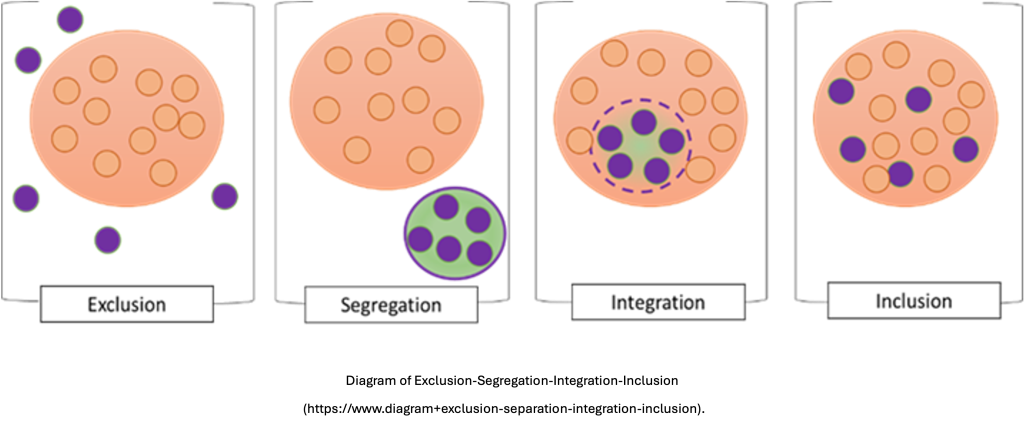
Cultural integration is often more emphasized and practiced than cultural inclusion in migration contexts. Cultural integration and cultural inclusion, though closely related, serve distinct purposes in the migrant experience. Cultural integration focuses on equipping newcomers with the essential skills and knowledge needed to navigate their new environment, such as language proficiency and practical competencies, while facilitating their initial participation in society.
Cultural inclusion of migrants not only focuses on providing equal opportunities and rights but also addresses the need for migrants to adopt and engage with the host society’s norms and values. This broadened approach is essential for creating cohesive communities where everyone feels genuinely integrated and valued.
As societies become increasingly diverse and multicultural, cultural inclusion has emerged as a critical goal in recent migration research (Sgaramella, 2024; Kupriianova & Kupriianova, 2023; Salgado & Patuzzi, 2022; Echeverría & Finotelli, 2024). The International Organization for Migration (IOM, 2022) now promotes immigrant inclusion and social cohesion as central pillars in the planning of international activities and programs throughout Europe.
Cultural inclusion emphasizes embracing diversity, celebrating individual identities, and fostering environments where every person feels a genuine sense of belonging. Cultural integration programs and cultural inclusion strategies need to work together to create societies that are both functionally and emotionally cohesive. of migration by increasing cultural inclusion?
Cultural Inclusion from an Educational Perspective
Inclusion is widely recognized as a fundamental right, ensuring that every individual has access to health, education, work, income, housing, and social relationships. According to the Finnish Institute for Health and Welfare (FIHW, 2022), everyone should have the opportunity to participate in and influence matters that affect both their personal lives and the broader development of society. Some studies have linked the process of cultural inclusion of migrants to the labour market (Lauren & Wrede, 2008), highlighting the role of public services in promoting societal equality (Ministry of Justice, 1999). However, cultural inclusion cannot be confined solely to equal opportunities in employment or basic services.
When inclusion is defined in terms of equal opportunities, public systems are responsible for providing equal access to information and services for everyone, including migrants, such as language programs, education, and healthcare. However, fostering a genuine sense of belonging and civic commitment poses an even greater challenge. Participation and engagement are often seen as indicators of belonging. For example, participation in community activities and elections can indicate the extent to which immigrants participate in decision-making at higher levels of society. Yet, it may not show how much they have accepted and embraced the norms of human rights. It is a fact that many refugees who have spent significant portions of their lives under dictatorial regimes may have developed habits and beliefs that conflict with those of liberal, secular, and democratic societies.
From an educational perspective, culture encompasses far more than a set of facts or communication skills that can be taught through specific programs. Immigrants often arrive with deeply ingrained habits of mind-ways of thinking and behaving- that may differ significantly from those of the host society. Transforming these mindsets requires a process of self-awareness and adaptation.
To facilitate this transformation, administrators in the host country must create flexible environments and services. This involves developing strategies to ensure migrants have access to vital information, educational content, and essential resources, while simultaneously fostering engagement and empowering them to actively participate in society. This dual approach not only promotes justice and reduces discrimination but also lays the foundation for building a more cohesive and resilient community.
However, cultural inclusion goes beyond merely facilitating participation, it nurtures shared values, social norms, and a profound respect for human rights. For vulnerable populations who may not have previously embraced these attitudes, this transformative approach fosters enduring shifts in perspective, empowering them to become fully integrated and active contributors to society.
When cultural inclusion is disregarded as a vehicle for learning and changing mindsets, there is a risk of reinforcing parallel lives. Instead of cultivating a truly multicultural society, the absence of this transformative process can lead to the coexistence of separate cultural enclaves that may eventually clash. In such a scenario where immigrants live in their parallel lives, even participation in decision-making may devolve into a contest of cultural dominance, where the focus shifts from collaborative strategies to advancing isolated community values, rather than upholding the universal principles of human rights.
Biculturalism in Minorities and Cultural Inclusion
While the idea of total integration, where immigrants completely assimilate and consider the host country as their only home, is appealing, it is also somewhat idealistic and may lead to unrealistic expectations. Rather than expecting migrants to abandon their previous habits of mind and cultural heritage, it is crucial to facilitate a transformative process that adapts and enriches existing values in a way that supports social cohesion. Many studies acknowledge that immigrants often develop a dual identity, reflecting their ties to both their heritage and their new surroundings. More relevant research, however, introduces the concept of bicultural identity – a more integrated and positive blending of both cultural spheres. According to the Oxford Review DEI Dictionary, bicultural identity development is defined as the process by which individuals integrate elements of their heritage culture with those of the host society, creating a unique and harmonious dual identity. Bicultural identity development is not about abandoning one’s original culture; rather, it involves a dynamic negotiation between maintaining cultural traditions and adopting new practices, values, and norms from the host environment. This approach not only preserves the richness of one’s original culture but also fosters a deeper connection to the host community. This process enables immigrants to retain their cultural roots while also engaging fully with their new surroundings. The result is a dual sense of belonging that can enrich both the individual and the broader community, fostering diversity and mutual understanding, ultimately contributing to a more inclusive and resilient society.
Maintaining a bicultural identity is a complex process, especially when the culture of origin differs significantly from the host society’s norms. This divergence poses challenging questions for both migrants and the organizations tasked with facilitating cultural integration and inclusion. How should elements of the original culture be blended with those of the new culture? When conflicts arise between the two, what aspects should be retained, adapted, or even left behind? More fundamentally, what criteria should guide the retention or modification of cultural norms, habits, and opinions? Ultimately, the key lies in finding shared values that can serve as common ground, fostering mutual understanding and social cohesion between immigrants and locals in the host country.
Respect for human rights as a shared value is not only a cornerstone of ethical governance but also a powerful catalyst for social transformation. The Universal Declaration on Cultural Diversity by the Office of the United Nations High Commissioner for Human Rights underscores that defending cultural diversity is inseparable from upholding human dignity and protecting the rights of minorities and indigenous peoples (OHCHR, 2001). Moreover, human rights provide a legal framework that holds governments accountable and creates the conditions necessary for achieving social justice, ensuring that all individuals are born free and equal in dignity and rights (Maharshi, 2018). The United Nations further emphasizes that values such as freedom, respect, and active participation are fundamental to realizing human rights and sustaining democratic societies (UN, ). This ethical foundation nurtures social tolerance and empathy, allowing diverse communities to coexist harmoniously under liberal and secular principles. As noted by initiatives promoting tolerance and human rights, a culture of tolerance, rooted in mutual understanding and intercultural dialogue, not only reinforces democratic ideals but also fosters equality and justice at every level of society (Chemat, 2021). Together, these shared human rights values empower individuals to embrace empathy, deepen social commitment, and contribute to building resilient, inclusive communities. Therefore, human rights values can provide the required references for creating goals and strategies for the cultural inclusion of immigrants.