Finland is a Nordic welfare state in Northern Europe known for its high quality of life, strong public services, and well-functioning institutions. Its governance system combines a central government with highly autonomous municipalities responsible for delivering key services such as education, healthcare, and social welfare. With a relatively small population and a strong emphasis on equality and innovation, Finland is often recognized for its effective public administration and inclusive social policies (Source).
Public Sector in Finland-the main institutions
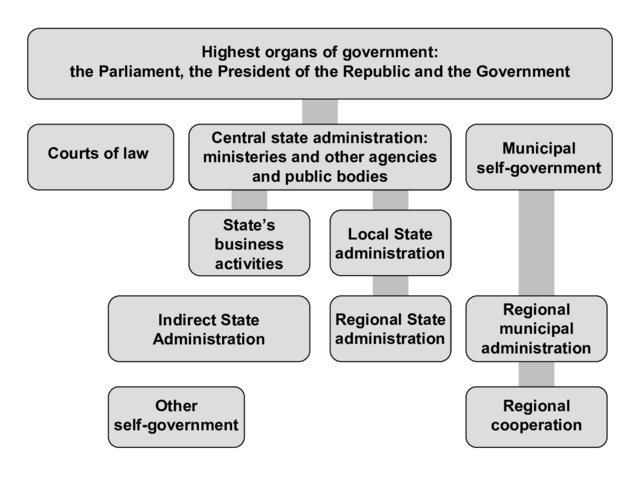
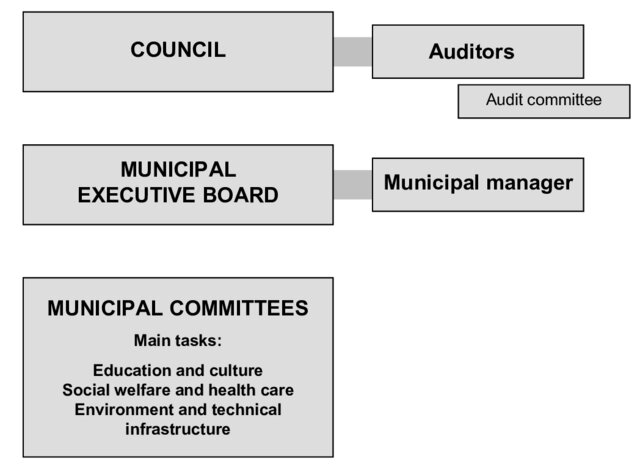
The first figure presents the multi-level governance framework, showing the relationship between central government, regional cooperation bodies, and municipalities, which act as the core providers of public services. The second figure focuses on the internal organisation and service responsibilities of municipalities, highlighting how they manage key sectors such as education, health, and social services through local decision-making, budgeting, and inter-municipal cooperation. Together, the figures emphasize the central role of municipalities in delivering welfare services and coordinating public service provision in Finland (Source)
Finland has a publicly funded, decentralized healthcare system based on the welfare state model. The system is mainly organized and regulated by the Ministry of Social Affairs and Health, while services are delivered locally by municipalities and regional authorities. Healthcare is largely tax-funded, ensuring universal access for residents, with a mix of public, private, and occupational healthcare services.
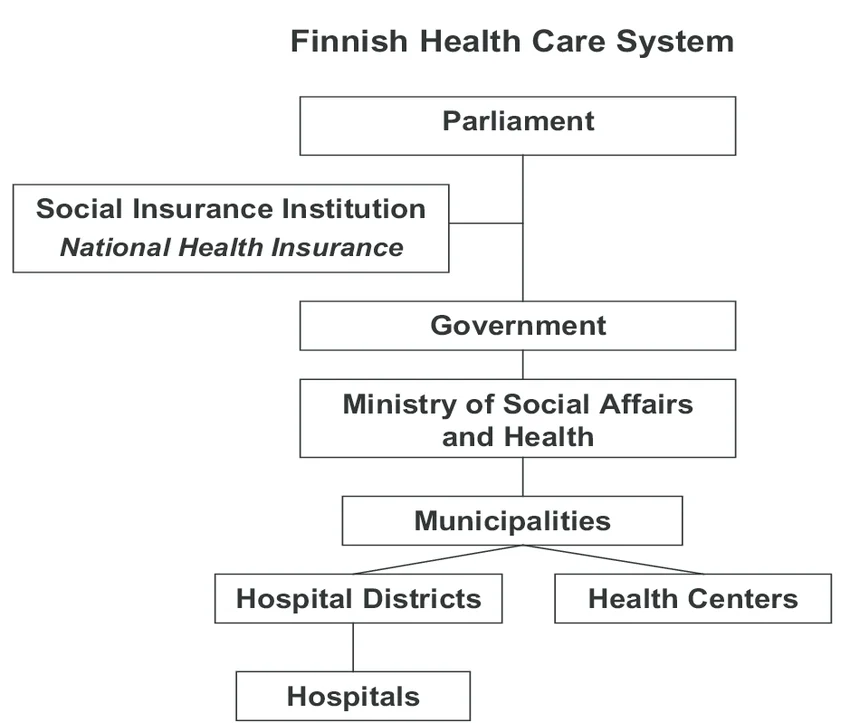
This figure shows the governance and authority structure, who is responsible, and how power flows:
– Parliament of Finland → sets laws – Government → executes policies – Ministry of Social Affairs and Health → directs the system – Social Insurance Institution of Finland → manages national health insurance – Municipalities → organize services – Hospitals & health centers → deliver care
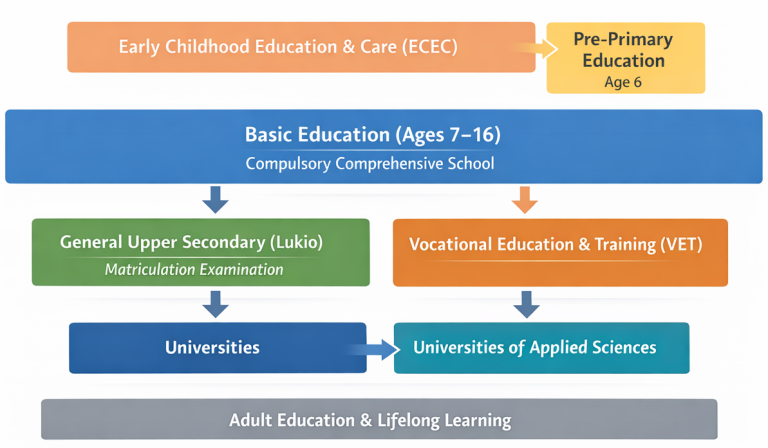
In Finland, the education system is primarily authorized and regulated by the Ministry of Education and Culture, which sets national policies and legislation. The Finnish National Agency for Education develops the national core curricula and guidelines. At the local level, municipalities are responsible for implementing education, managing schools, and adapting services to local needs.
Early Childhood Education and Care (ECEC) → for young children before compulsory education
Pre-primary Education (age 6) → one year, prepares children for school
Basic Education (ages 7–16) → comprehensive school (no tracking), compulsory
Upper Secondary Education (choice-based) – General upper secondary (lukio) → leads to matriculation exam – Vocational education and training (VET) → practical, skills-based